Originaly posted 24/01-2026 on bluesky
There are two large format foldable phones on the Norwegian market Google Pixel 10 pro fold (yes, the name is a mouthful) and Samsung Galaxy ZFold 7. But what device is the best? Over a couple of months, I have tested both devices, here are my thoughts.
Hardware
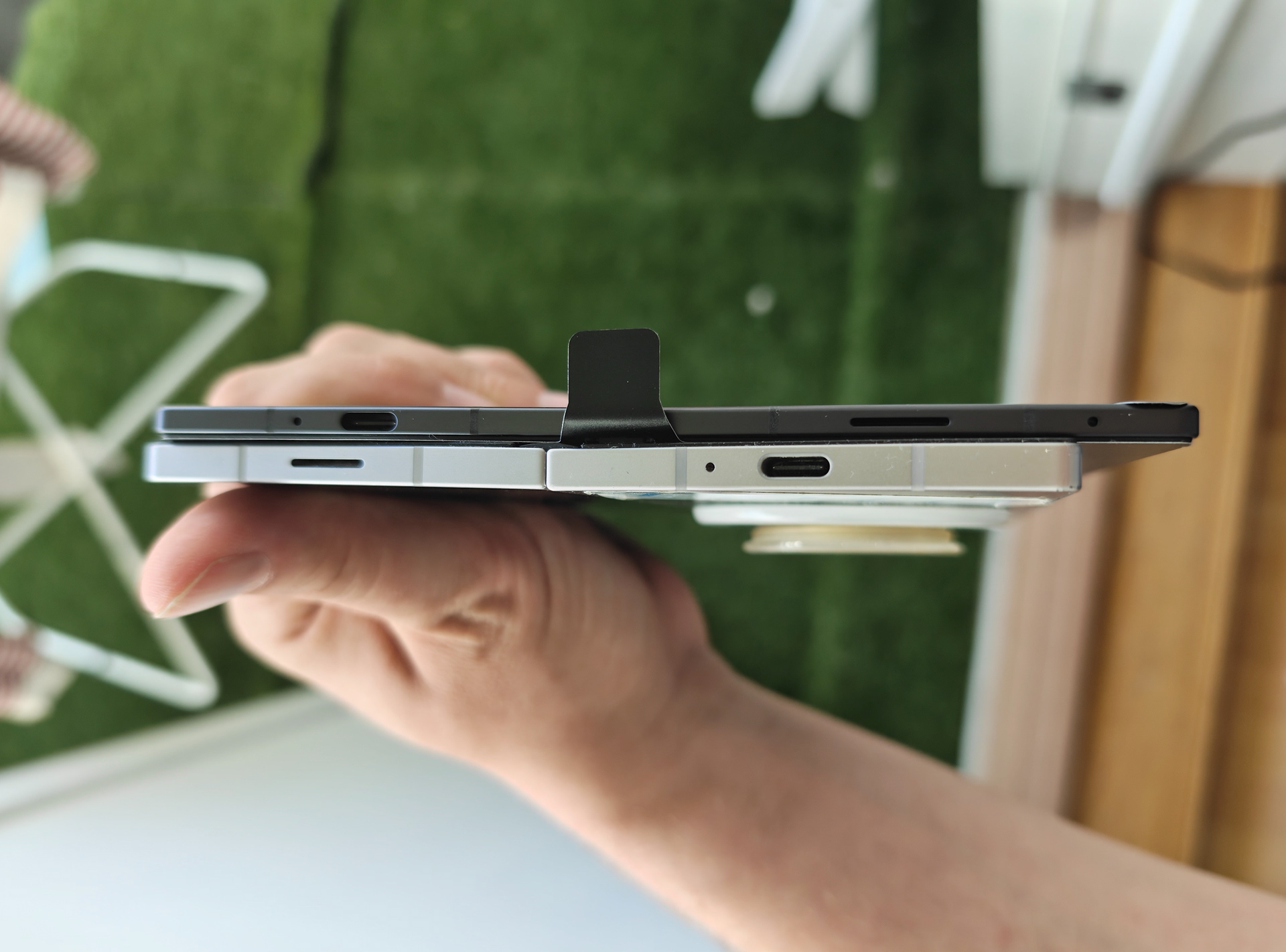
Just by looking at the devices it is easy to see who is leading the market in foldable devices on the European market. Samsung have done foldable devices now for the last six years. You can see the innovation from device to device and the Galaxy zFold 7 is a large update form last year’s zFold 6. When handling the zFold 7 closed, it feels just like a normal slab type phone. Not particular thicker than the other devices from Samsung, but as soon as you unfold it, it’s so thin that the first time you just have to look one extra time. It is just barely thicker than the usb-c port. The outer display is a bit wider than the last generation, which also translates to a larger inner display.
I must admit, I was a bit sceptical when going from the zFold 6 to 7. I really loved the unusual aspect ratio of the zFold 6, but because of the amazing thinness of the device I don’t feel like I have lost the hand feel that I loved on the zFold6.
The zFold7 is Qi2 ready. This means that the device has everything except the magnets to support the Qi2 standard. One of the first things I did when getting the loaner from Samsung was to buy the magnet-case so I could use Qi2 or Magsafe accessories. This is something I did not have to do when getting the Google Pixel 10 pro fold.
When looking at the Pixel next to the Samsung, the Pixel looks outdated. Thick and wide. With a case on the Samsung, it still feels thinner than the pixel. Even though the Pixel and zFold are the same thickness when the zFold is with the case. Was it not for the built in Qi2 support, or what Google calls Pixelsnap, I would never have considered the device. But on the other hand, Google have created a much more playful device.
Where the Samsung has a corporate professional look. Google have chosen colours and a look that makes you smile. You can get the Pixel in either a boring grey colour or a more exciting pastel green called Jade, that quite resembles the colour of the rock that gives the name of the colour.
The Samsung may be the more sensible look and fitting the people buying a phone for about 27 000 NOK. A business device. But the Pixel brings more joy form the look and is a couple of thousands cheaper at about 24 000 NOK. Both prices are the base models with 256 GB storage.
Software
Here Samsung really shows its true colours. They have stable good software that works well with the formfactor. The six years of having a device in the consumers hands really shows. It’s easy to use, and practical. They have put in AI-models that for the most part is not in your face, and easy to ignore. But where the AI-models of Samsung really are useful are in the settings. Where you can use natural search to find what you are looking for. No more dooms scrolling in the setting app, tapping in and out of different parent-categories to find how to change the always-on-display settings. This is an actual good use of language models and makes it easier for the user.
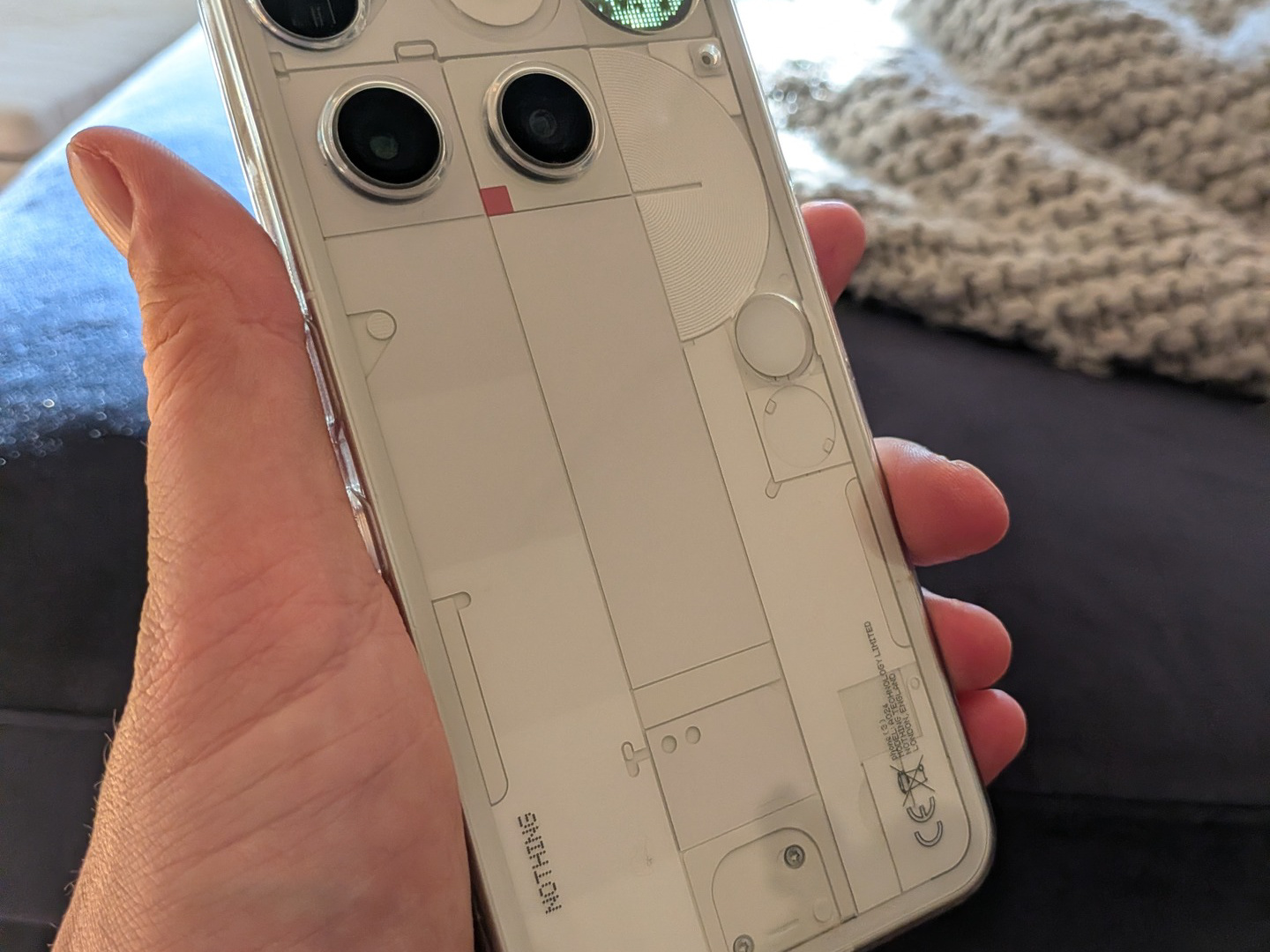
On the complete opposite we have the Pixel 10 pro fold. This is not software ready for release. I have experienced so many freezes, and non-responsive software that I wonder if Google rushed the software. This is the third folding pixel, but it feels like the first. For the most part, the phone works perfectly. But when it freezes or becomes unresponsive, you cannot do anything. I usually try to turn the screen on and off, or open and close the phone. Sometimes it works, sometimes I just have to wait. I have never needed to reboot because of the software, but with a powerful phone for over 20 000 NOK, this is unacceptable. The overall experience when not looking at the freeze is that the pixel is still the clean and good version of Android, all the bloatware makes the otherwise good software experience less good. I still have one champion when it comes to Android-software, and that is the London-based Nothing Inc. They still have the superior software-experience. I think both Google and Samsung would have gained some value by loaning some design principles in their software from Nothing.
I have done some customisation, and are running Niagara Laucher on both devices, to make the phones a bit less distracting, so I have mostly not been using the first party home screen. I have not had any problems with running Niagara on both devices.
Camera
I find it strange that both Google and Samsung don’t use the best of their camera-suite in their most expensive phones. Of course, I understand that is hard, or even impossible to fit the periscope camera in the thin Galaxy zFold7.
The zFold7 have the same sensor as the main camera of the Galaxy S26 ultra from Samsung, they also have the same 3x telephoto sensor. But this is where the similarities end. Where Samsungs top slab-phone have a 50-megapixel ultrawide sensor, the zFold7 have gotten a 12-megapixel ultrawide. This is not necessarily a bad thing, the sensor on the zFold is larger. But the periscope zoom on the S26 ultra is nowhere to be seen. I wonder if Samsung would have done the same as Nothing did to fit a periscope camera, cut a hole in the motherboard. That they may be would have been able to fit it.
Overall, the Samsung is good enough for most people. I have used the zFold7 for video-reports and stills in a professional capacity with no problem.
For the pixel, the cameras are completely different form the cheaper non-foldable alternatives. None of the sensors are the same as the cheaper devices. It is not inthe good way, Google has crammed three cameras on the back that are not just smaller when counting pixels, but also smaller in sensor size. So, you won’t gain anything buy going about 10 000 NOK up in price. You will lose camera quality. Pixels computational photography is still great, but video is not at the quality of the Samsung. Do you need a phone for video, buy something that is not a Google Pixel. They jump exposure and white balance way too much to trust for anything else than some small clips of your family at home.
Conclution
There is one champion. If you can afford a foldable today, Samsung is still king. Google tries, and makes a fun device that works great, most of the time. But Samsungs zFold7 is polished, clean and works well. You get an overall better package from Samsung than grom Google. The Samsung software is optimized over years, and the hardware is now with less compromises than before. It feels like a mature device. There are two reasons for not going with the zFold7. One is you want a fun device, and you want Magsafe, sorry Pixelsnap. You will compromise a lot for the fun, but for a few people it’s worth it. The other one is that you want a bigger tablet and are willing to use even more money to get the new Samsung Trifold. For most people looking at a foldable, Samsung Galaxy zFold7 is the one and only. But most people do not need a foldable. Unless you have loads of money waiting to be used or have some special interest or needs, go out and buy a flagship non-foldable, it will be a better use of your money.